


AC Tune-Up in Lake Nona, FL



Keeping your air conditioner tuned and ready is essential in Lake Nona, where long, humid summers and frequent storms put heavy strain on cooling systems. An Air Conditioning Tune-Up in Lake Nona, FL addresses common wear points before they become breakdowns, restores peak efficiency, and helps your home maintain consistent comfort and better indoor air quality.
Why a tune-up matters for Lake Nona homes
Lake Nona residents use their ACs heavily for most of the year. High humidity increases condensate production and the risk of clogs and microbial growth in drain lines and coils. Storm season brings power fluctuations that can loosen electrical connections or shorten component life. Combined, these factors make regular preventative care one of the most effective ways to avoid emergency repairs, reduce energy use, and extend equipment life.
Common AC problems in Lake Nona and what causes them
- Reduced cooling capacity or warm rooms: often caused by low refrigerant, dirty coils, or restricted airflow.
- Short cycling or frequent on-off cycles: can be due to thermostat issues, electrical faults, or an oversized system.
- Drain pan or condensate overflow: clogged condensate drains from high humidity and organic buildup.
- High energy bills: dirty filters, low refrigerant, and worn components reduce efficiency.
- Unusual noises or vibrations: loose mounting, failing motors, or worn fan bearings.
- Frozen evaporator coils: poor airflow from dirty filters or blower problems.
- Electrical failures after storms: loosened connections, bad capacitors, or damaged contactors.
What a professional multi-point tune-up includes
A full tune-up inspects, cleans, adjusts, and tests the system to catch small issues early. A typical professional multi-point inspection covers about 20 to 21 key items, including:
- Visual inspection of outdoor condenser and indoor evaporator cabinet
- Replace or inspect air filters and recommend proper MERV level
- Clean evaporator and condenser coils to restore heat transfer
- Clear and flush condensate drain and check drain safety switch
- Check refrigerant levels and inspect for leaks
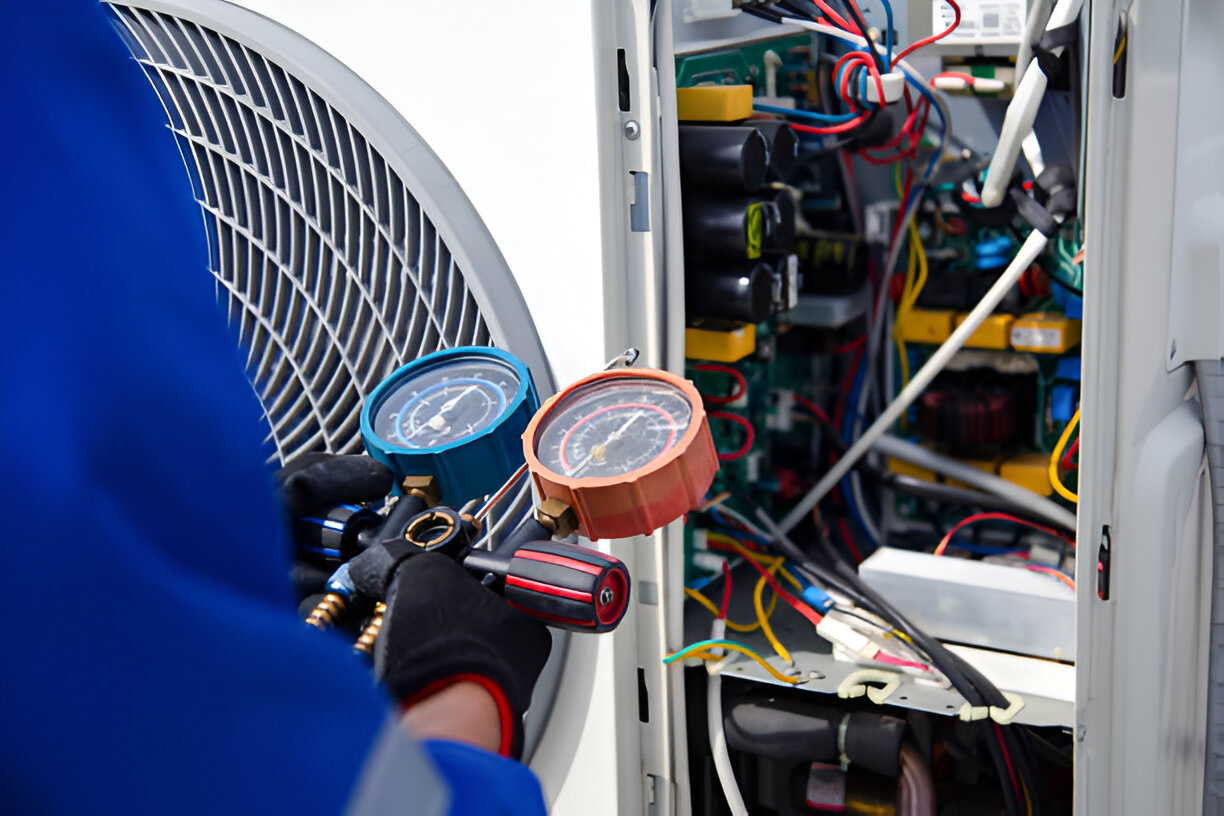
- Measure system pressures and temperatures for performance analysis
- Tighten electrical connections and inspect wiring for wear
- Test capacitors, contactors, and relays for proper operation
- Lubricate motors and moving parts where applicable
- Inspect blower assembly and measure airflow to confirm proper CFM
- Verify thermostat calibration and operation (including smart thermostats)
- Inspect and test safety controls
- Check ductwork for obvious disconnections or restrictions
- Inspect fan blades and motor operation; balance if necessary
- Performance testing: runtime, cycle frequency, and temperature split
Each item is performed with professional diagnostic tools and documented observations so you understand system condition and priorities for future repairs.
How technicians diagnose problems during a tune-up
Technicians triangulate symptoms with data. They combine visual inspection with temperature and pressure measurements, electrical testing, and airflow checks. For example, a low temperature split coupled with low refrigerant pressure points to a leak or undercharge. Abnormal current draw on the compressor indicates mechanical stress. This methodical approach isolates root causes instead of guessing, which reduces repeat visits and unnecessary parts replacement.
Repairs and solutions commonly recommended after a tune-up
- Coil cleaning and chemical treatment to remove grime and improve efficiency
- Condensate line clearing and installation or repair of safety switches
- Tightening or replacing worn electrical components like capacitors and contactors
- Refrigerant recharge and leak detection repairs
- Blower motor servicing or replacement when airflow is compromised
- Duct sealing or insulation improvements to stop conditioned air loss
- Thermostat recalibration or smart thermostat optimization for better control
Technicians prioritize safety and energy-saving repairs first, and they can explain which items are critical now versus those that can be deferred.
Recommended timing for tune-ups in Lake Nona
- Annual pre-season tune-up: best performed in late winter or early spring before heavy cooling starts to ensure readiness and avoid peak-season delays.
- Consider a mid-season inspection for homes with heavy use, elderly or sensitive occupants, or for systems that showed issues at the last tune-up.
- After major storms: have the electrical and system controls checked if there were nearby outages or lightning.
Regular annual maintenance is the most cost-effective approach to maintaining reliable cooling and avoiding emergency service calls during extreme heat.
Benefits you’ll notice after a complete tune-up
- Improved cooling performance and more consistent indoor temperatures
- Lower energy consumption and more predictable utility bills
- Fewer emergency breakdowns during peak heat
- Extended equipment life and delayed need for costly replacement
- Better indoor air quality from clean coils, filters, and clear drains
- Quieter operation as worn parts are serviced or replaced
Simple maintenance tips to keep between professional tune-ups
- Replace or check filters every 1 to 3 months depending on use and indoor air quality
- Keep the outdoor condenser clear of debris, grass clippings, and landscaping
- Monitor the condensate pan and area around the indoor unit for leaks or moisture
- Set thermostats to reasonable setpoints and use programmed schedules to avoid excessive short cycling
- Note any new smells, noises, or changes in cooling performance and have them inspected early
Maintenance Plan
Heat Pump/ AC Tune-Up

Furnace Tune-Up
Customer Testimonials