


AC Repair in Orlando, FL



Living in Orlando means long, hot summers, high humidity, and frequent afternoon storms. When your air conditioner fails, comfort and indoor air quality drop fast. Professional air conditioning repair in Orlando, FL focuses on fast-response diagnostics, reliable repairs, proper parts replacement, and guidance to keep your system running through hurricane season and year-round heat.
Why timely AC repair matters in Orlando homes
Orlando’s warm, humid climate keeps HVAC systems working harder than in many other regions. Continuous operation increases wear on compressors, motors, and electrical components. High humidity encourages coil corrosion and mold growth in drain pans and ducts. Fixing issues quickly:
- Restores cooling and humidity control
- Prevents secondary damage like mold or water intrusion
- Helps preserve manufacturer warranties
- Reduces energy use caused by failing components
Common AC problems in Orlando and what they mean
Homes in Central Florida commonly experience these faults:
- No cooling or weak cooling — often caused by dirty coils, low refrigerant, failing compressors, or blocked airflow.
- Refrigerant leaks — reduced cooling capacity and potential environmental/regulatory concerns; leak repair plus recharge is required.
- Compressor failures — can be caused by age, electrical faults, or overheating; major component that may require multi-step replacement.
- Electrical issues — tripped breakers, bad capacitors, faulty contactors, or loose wiring that cause intermittent operation or no start.
- Short cycling — system turns on and off frequently, increasing wear and energy cost; commonly caused by oversized units, thermostat faults, or refrigerant issues.
- Frozen evaporator coils — restricted airflow or refrigerant problems leading to ice buildup and reduced cooling.
- Drainage and condensate problems — clogged drain lines or pans can cause water leaks and mold.
- Unusual noises or odors — failing motors, loose parts, or microbial growth require inspection and repair.
Fast-response diagnostics and troubleshooting process
An effective repair visit follows a clear diagnostic routine:
- Initial triage — homeowner symptoms and operational history are reviewed to narrow likely causes.
- Safety check — power is shut off and inspected to ensure safe access.
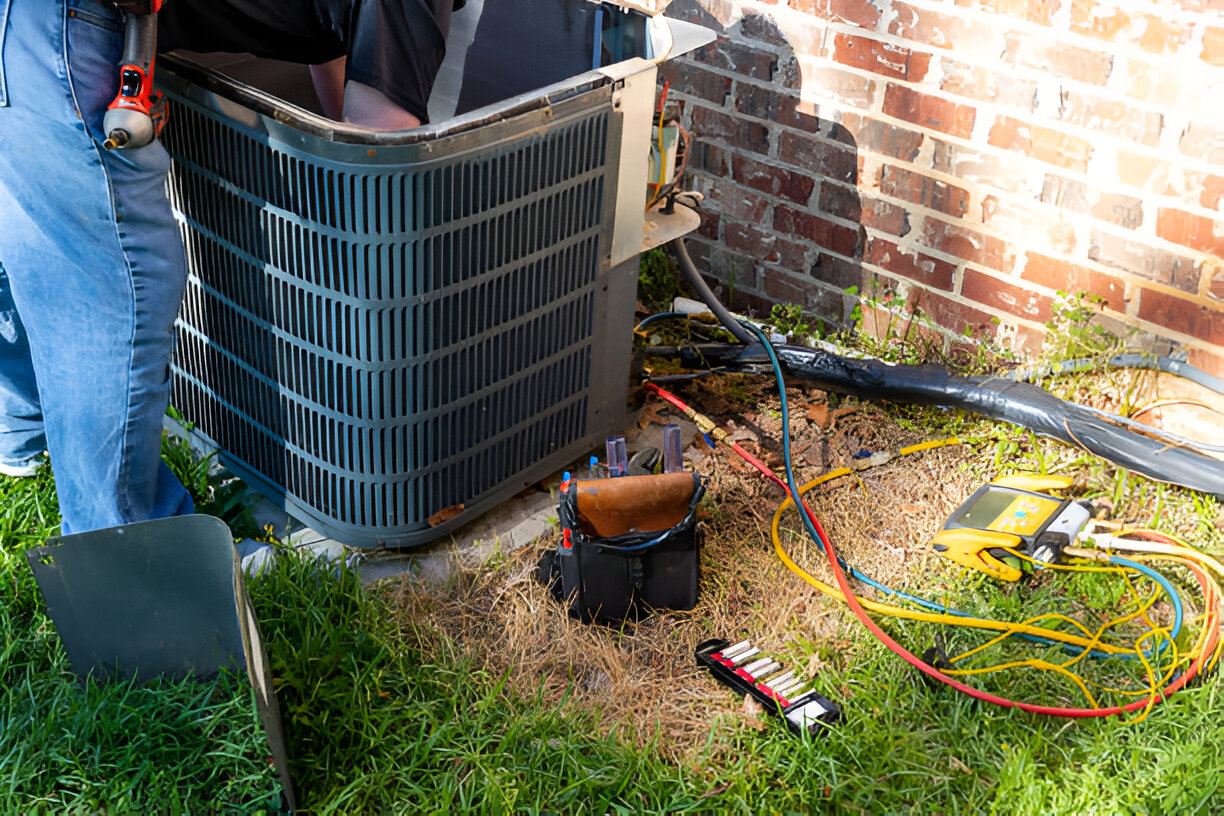
- System inspection — condenser, evaporator, filters, ducts, and electrical components are examined for visible issues.
- Performance measurements — temperature split, refrigerant pressures, amperage draw, and voltages are measured to pinpoint faults.
- Leak detection and airflow tests — if needed, electronic leak detectors and blower/duct tests are used.
- Estimate and repair plan — recommended repairs and parts are explained along with estimated timeframes for completion.
Typical on-site diagnostic time ranges from 30 minutes for simple checks to 90 minutes for in-depth troubleshooting.
Repairs, parts replacement, and quality control
Common repairs handled during service include:
- Replacing capacitors, contactors, fan motors, and relays
- Repairing refrigerant leaks and performing refrigerant recovery and recharge
- Replacing compressors, evaporator or condenser coils, and metering devices
- Addressing thermostat or control board failures
- Clearing condensate drain clogs and sanitizing drain pans
Technicians use compatible OEM-equivalent parts and follow refrigerant handling regulations. After replacement, systems are tested to ensure proper pressures, temperature differentials, amperage draw, and safe electrical connections.
Warranty handling and documentation
When a repair involves parts that may be covered under manufacturer warranty or extended service plans:
- Serial numbers and installation dates are verified
- Manufacturer warranty terms and required documentation are reviewed
- Replacement parts are recorded and warranty paperwork is completed when applicableThis helps preserve remaining system warranty coverage and ensures repairs meet manufacturer requirements.
Emergency and after-hours repair options in Orlando
Orlando homeowners face heat stress and potential system failures during peak weather or storm events. Emergency services typically include:
- Rapid triage guidance over the phone to limit damage or health risk
- On-site assessment for unsafe conditions like refrigerant leaks or electrical hazards
- Temporary measures to restore minimal cooling where feasible until full repairs are possibleDuring hurricane season, priority is often given to safety concerns and systems with water intrusion or electrical risks.
Typical repair timelines
Repair duration depends on the fault and parts availability:
- Quick fixes (capacitor, contactor, thermostat): 30 minutes to 2 hours
- Drain line unclog, filter/coil cleaning: 30 minutes to 2 hours
- Refrigerant leak locating and repair: several hours; leaks may require follow-up checks
- Condenser fan motor or coil replacement: 2 to 5 hours
- Compressor or major component replacement: 4 to 8 hours (may require parts ordering and multi-day scheduling)Technicians can often complete minor repairs the same day; larger component replacements may need scheduling for parts procurement.
Preventive steps to reduce future breakdowns
In Orlando’s climate, regular maintenance is essential. Recommended preventive actions:
- Change or clean filters monthly during high-use months
- Schedule seasonal tune-ups for coil cleaning, refrigerant checks, and electrical inspection
- Keep outdoor condenser clear of debris, plants, and lawntrimmings
- Ensure attic and duct insulation and sealing to reduce load
- Install surge protection to guard control boards during storms
- Maintain proper outdoor unit clearance for airflow and shade canopy consideration without restricting ventilation
- Monitor for early warning signs like short cycling, reduced airflow, or strange noises
Benefits of professional, timely repairs
Prompt, professional AC repair preserves comfort, improves indoor air quality, reduces energy waste, and helps extend equipment life—critical in Orlando where cooling demand is high year-round. Proper diagnostics, EPA-compliant refrigerant handling, and correct parts replacement minimize recurring problems and help protect warranty coverage.
Maintenance Plan
Heat Pump/ AC Tune-Up

Furnace Tune-Up
Customer Testimonials