



Whole House Dehumidification in Lake Conroe, TX



Controlling indoor humidity in Lake Conroe homes is essential for comfort, health, and the longevity of your property. Van Eddies Heating & Air Conditioning specializes in whole house dehumidification that addresses the specific challenges of the Lake Conroe climate: high summer dew points, lake-driven moisture, humid crawlspaces, and the persistent risk of mold and musty odors.
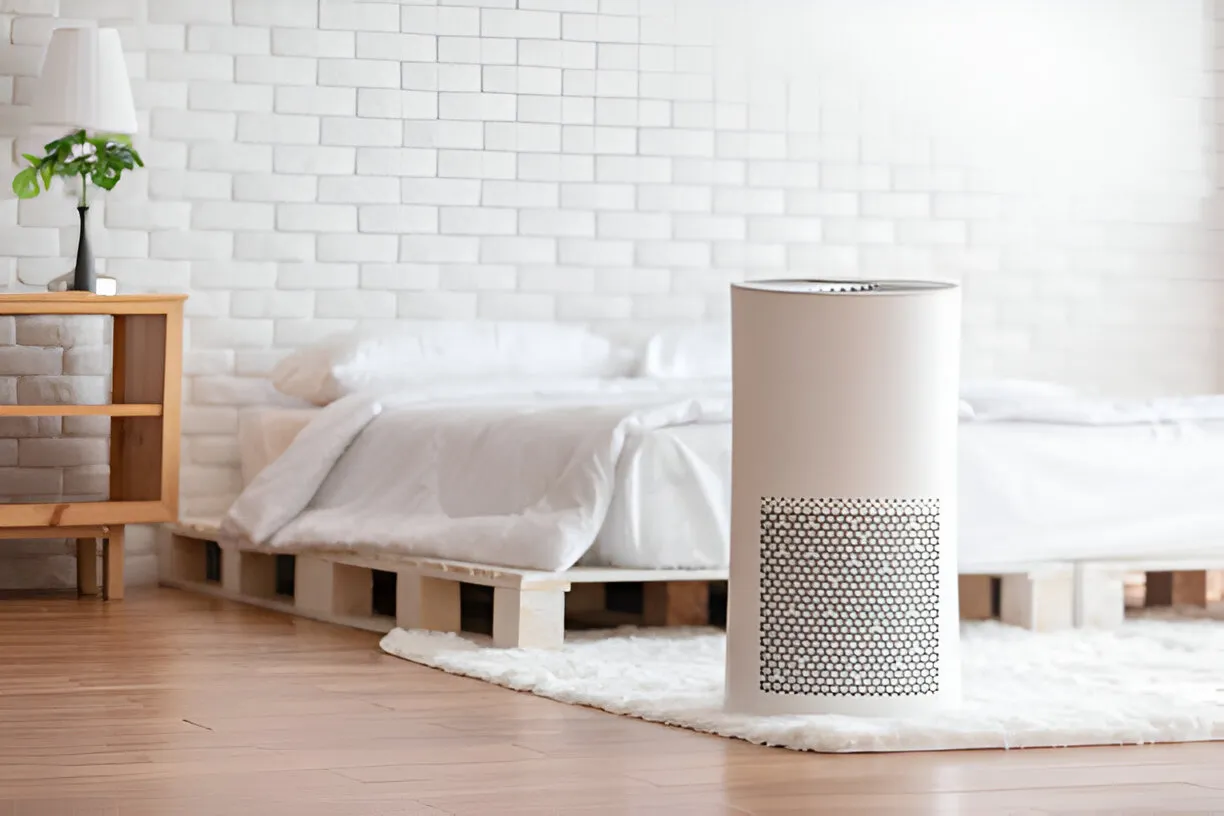
Why whole house dehumidification matters in Lake Conroe, TX
Lake Conroe sits in a humid subtropical climate where summer humidity often exceeds comfort thresholds. The lake and surrounding vegetation increase ambient moisture levels year round. High relative humidity in homes creates several problems:
- Promotes mold and mildew growth on walls, ceiling cavities, insulation, and in crawlspaces.
- Causes musty odors and worsens allergies and asthma by allowing dust mites and mold spores to thrive.
- Makes air feel warmer, driving greater AC use and rising cooling bills.
- Damages wood floors, furniture, drywall, and electronics over time through swelling and corrosion.
A properly sized whole house dehumidifier keeps indoor relative humidity (RH) in the ideal range for comfort and health, typically between 40 and 50 percent in the Lake Conroe area. That range reduces mold risk and improves perceived cooling without needing to over-cool living spaces.
Whole house dehumidifier options and how they differ
Van Eddies Heating & Air Conditioning assesses your home and recommends the best system from common whole-house options:
- In-duct refrigerant dehumidifiers
- Installed directly in the HVAC ductwork or next to the air handler.
- Use the refrigeration cycle to condense moisture from return air and drain it away.
- Good energy performance when paired with the home’s air handler and a variable-speed blower.
- Desiccant dehumidifiers
- Use moisture-absorbing materials (desiccants) and heat to remove humidity.
- Perform well in cool or low-temperature spaces, but typically use more energy in warm climates.
- Less common for standard Lake Conroe residential applications, more useful for specific commercial or conditioned spaces.
- Bypass or whole-house portable systems (less common)
- Bypass units divert some air through a dehumidifier and send it back into the return plenum.
- Useful when full integration into ductwork is not practical, but offer lower overall performance than integrated systems.
- Hybrid systems and integrated IAQ packages
- Dehumidification built into the air handler or combined with energy recovery ventilators (ERV) for balanced ventilation plus moisture control.
- These systems can provide the best balance of energy efficiency and indoor air quality when designed and installed correctly.
Common whole house dehumidification goals and problems in Lake Conroe homes
Typical reasons homeowners choose whole house dehumidification:
- Frequent mold or mildew in bathrooms, closets, or attic spaces.
- Persistent musty odors after rain or high humidity periods.
- Condensation on windows, pipes, or AC ducts.
- Allergy or asthma flare-ups linked to indoor mold or dust mite growth.
- Swelling hardwood floors or paint failure.
Common issues we diagnose:
- Under-sized dehumidifier for square footage and humidity load.
- Excess infiltration from leaky windows, doors, or unsealed crawlspaces.
- Poor duct design or restricted airflow reducing dehumidifier effectiveness.
- Improper condensate routing causing backups or leaks.
- Dehumidifier controls set too low or too high for local conditions.
Sizing and placement: how much capacity do you need?
Sizing a whole house dehumidifier is not just about square footage; it includes measuring your home’s humidity load, insulation, occupancy, and moisture sources. Van Eddies Heating & Air Conditioning follows these principles when sizing systems for Lake Conroe homes:
- Capacity is expressed in pints per day (pints/day) or liters per day. Typical residential ranges:
- Smaller homes and apartments (under 1,200 sq ft): 30 to 50 pints/day may be adequate if well sealed.
- Medium homes (1,200 to 2,500 sq ft): 50 to 90 pints/day is common.
- Larger or high-moisture homes (over 2,500 sq ft, or with crawlspaces and lake exposure): 90 to 130+ pints/day.
- Target indoor RH:
- Aim for 40 to 50 percent RH for summer comfort and mold control in Lake Conroe.
- Avoid reducing RH below 35 percent routinely, since very low humidity can cause cosmetic damage and breathing discomfort.
- Placement:
- In-duct units are typically installed on the return or supply side near the air handler for even distribution.
- Crawlspace installations require either a durable unit rated for damp conditions or routing to an accessible space with proper condensate handling.
- Attic installs are possible but require attention to insulation and pump/drain arrangements. Attic heat can reduce unit efficiency and increase maintenance requirements.
- Airflow requirements:
- Proper airflow across the dehumidifier coil is essential. Most whole-house units need 200 to 400 cubic feet per minute (CFM) of conditioned airflow per ton equivalent for effective performance.
- Ductwork condition:
- Leaky or poorly insulated ducts reduce performance. Sealing and insulating ducts often improves dehumidifier effectiveness and energy use.
An accurate load calculation and a short on-site humidity audit determine the right capacity. Van Eddies Heating & Air Conditioning uses industry-standard sizing practices to match system output to real-world Lake Conroe conditions.
Installation and ducting requirements
Whole house dehumidifier installation must be planned to meet mechanical, drainage, and electrical needs:
- Location and access
- Install units where there is adequate service clearance and access to filters, coils, and controls.
- Locate near the air handler or in a conditioned mechanical closet where possible to maximize efficiency.
- Duct connections
- Integrated units are tied into the return plenum or both return and supply for bypass models.
- Ensure connections are sealed with mechanical fasteners and approved duct sealant to avoid leakage and inefficiency.
- Flexible duct should be avoided for primary connections due to airflow resistance.
- Drainage
- Condensate must be routed to a floor drain, standpipe, or condensate pump. Gravity drains are preferable when possible.
- When installed in attics or other areas above drains, an automatic condensate pump with a float safety switch is required.
- A secondary drain pan and overflow shutoff switch add protection against leaks affecting finished areas.
- Electrical
- Most whole house units require a dedicated circuit. Some units use 120V, many high-capacity models require 240V.
- Proper circuit sizing and wiring, along with a fused disconnect, are standard code requirements.
- Controls integration
- Install a humidity controller (humidistat) in a central living area, not in an attic or near exterior doors.
- Modern units can integrate with smart thermostats and home automation for combined temperature and humidity management.
- Code and permit considerations
- Plumbing and electrical work may require permits in Lake Conroe and Montgomery County. Proper permits and inspections ensure safety and compliance.
Typical energy use and efficiency tips
Whole house dehumidifiers consume electricity, but when correctly sized and paired with a well-functioning HVAC system, they can reduce overall cooling costs by removing latent load and allowing the thermostat to be set a bit higher. Energy considerations include:
- Energy use metrics
- Dehumidifier performance is often measured as pints removed per kilowatt-hour or pints per day. Higher-efficiency units remove more moisture for each kilowatt-hour consumed.
- Expect a properly sized, efficient whole-house dehumidifier to use several hundred to a few thousand kilowatt-hours per year depending on capacity and local humidity.
- Efficiency tips to keep operating costs down
- Pair dehumidifier with a variable-speed air handler: the system can run longer at lower speeds, improving moisture removal while minimizing energy spikes.
- Use a humidity-controlled setpoint rather than continuous runtime to avoid unnecessary operation.
- Seal and insulate ducts to keep conditioned air inside the system and reduce infiltration of humid outdoor air.
- Improve building envelope: caulk around windows and doors, insulate the attic, and seal crawlspaces to reduce moisture infiltration and lower load.
- Set thermostat and humidistat together: allowing temperature to remain slightly higher while maintaining RH often reduces overall energy use compared to overcooling to remove moisture.
- When dehumidifier energy use increases
- If the unit is oversized for the home, it may short-cycle, reducing efficiency.
- Poor airflow or dirty filters increase fan energy and reduce moisture removal efficiency.
- Condensate pump failures or clogged drains cause nuisance runs or cycles.
Routine maintenance guidance
Regular maintenance keeps whole house dehumidifiers running efficiently and prevents common failures:
- Monthly to quarterly maintenance
- Check and replace or clean the intake filter every 1 to 3 months depending on household dust and pets.
- Inspect condensate drain lines for clogs and ensure the condensate pump (if present) operates correctly.
- Verify the humidistat setting and sensor placement; move or recalibrate if readings do not match indoor conditions.
- Annual inspection and service
- Professional annual service should include coil cleaning, electrical connections check, performance testing, and inspection of control logic.
- Technicians should test the unit’s moisture removal rate, check for refrigerant leaks on refrigerant-based units, and confirm proper airflow.
- Check safety devices including float switches, overflow switches, and condensate pan integrity.
- Crawlspace and attic-specific tips
- If the dehumidifier serves a crawlspace, regularly inspect for standing water, insulation condition, and proper vapor barriers.
- Attic-installed units require more frequent checks for condensate pump reliability and attic insulation that prevents hot attic air from reducing efficiency.
- Signs maintenance is needed
- Increased noise, reduced moisture removal, frequent on/off cycling, visible leaks, ice on coils, and higher-than-normal energy use are all signs that service is needed.
Typical problems, diagnostics, and solutions
When whole house dehumidifiers underperform, a systematic diagnosis pinpoints the issue. Common failure modes in Lake Conroe homes and corrective actions include:
- Problem: Insufficient moisture removal
- Diagnosis: Unit undersized, excessive air infiltration, or low airflow.
- Solution: Re-evaluate sizing with a humidity load calculation, seal building envelope and ducts, clear filters and ducts, verify blower speeds.
- Problem: Intermittent condensate leaks
- Diagnosis: Clogged drain, failed condensate pump, improper trap installation.
- Solution: Clear drains, replace or service pump, correct trap and slope.
- Problem: Short-cycling
- Diagnosis: Oversized unit, or humidistat located in a non-representative spot (near kitchen or bathroom).
- Solution: Replace with correctly sized unit or relocate sensor.
- Problem: Frozen evaporator coil
- Diagnosis: Low airflow, refrigerant issues, or very low return air temperatures.
- Solution: Restore airflow, check refrigerant charge and restore normal operating conditions.
- Problem: High energy bills after install
- Diagnosis: Incorrect control strategy, continuous operation at high setpoint, or unit serving an unsealed home.
- Solution: Change to humidity-based control, seal building envelope, integrate with variable-speed blower.
Van Eddies Heating & Air Conditioning performs a full diagnostic workflow including airflow measurement, humidity mapping, duct leakage testing, and system performance verification to recommend targeted repairs or upgrades.
Benefits beyond comfort
Investing in whole house dehumidification delivers measurable benefits beyond immediate comfort:
- Mold prevention and improved indoor air quality
- Lower RH reduces mold and dust mite viability, improving respiratory health and home safety.
- Longer lifespan for building materials and furnishings
- Reduced swelling, warping, and corrosion extends the life of wood floors, cabinetry, drywall, and electronics.
- Lower perceived cooling demand
- Homes feel cooler at higher temperatures when humidity is reduced, often enabling setpoint adjustments that lower HVAC energy use.
- Better odor control
- Persistent musty odors caused by damp materials are reduced when RH is controlled.
- Improved resale value
- A healthy home with controlled humidity and a documented maintenance plan reassures buyers, especially in humid regions like Lake Conroe.
Service plans and promotions for Lake Conroe customers
Van Eddies Heating & Air Conditioning recognizes that ongoing maintenance protects your investment in whole house dehumidification. Our service options typically include:
- Annual inspection and tune-up plans
- Scheduled performance checks, coil cleaning, filter reminders, condensate line inspection, and prioritized diagnostic service.
- Multi-system maintenance packages
- Combined HVAC and dehumidifier coverage for homes that require paired servicing under one plan.
- Seasonal promotions
- Seasonal offers and bundled IAQ promotions are periodically available to help homeowners upgrade or add dehumidification as part of broader indoor air quality improvements.
- Repair and replacement guidance
- When a system is no longer economical to repair, we provide replacement recommendations sized to your home and local humidity conditions, with options for higher-efficiency units tailored to Lake Conroe homes.
These plans are designed to keep equipment operating safely, maintain removal capacity, and minimize interruptions during the highest humidity months.
Choosing the right whole house dehumidifier in Lake Conroe
When evaluating options, consider these factors:
- Real-world capacity for your home’s moisture load, not just manufacturer ratings.
- Integration with your current HVAC system and whether your air handler supports variable speeds.
- Installation location, drain routing, and electrical availability.
- Warranty coverage, manufacturer reliability, and service access in Lake Conroe.
- Long-term operating cost and energy performance, not only upfront equipment price.
Van Eddies Heating & Air Conditioning combines local climate knowledge, on-site humidity assessments, and industry-standard sizing practices to recommend systems that deliver consistent results in Lake Conroe homes.
Final considerations and routine homeowner advice
For homeowners in Lake Conroe, an effective dehumidification strategy blends equipment, building improvements, and proper controls:
- Seal crawlspaces and insulate attics to reduce moisture migration.
- Maintain HVAC filters and schedule annual service for both AC and dehumidifier.
- Use the humidistat to maintain RH in the 40 to 50 percent range during humid months.
- Keep windows and exterior doors closed during high humidity days to reduce infiltration.
- Monitor for signs of moisture in basements, attics, and crawlspaces and address sources promptly.
A well-designed whole house dehumidification system protects the health, comfort, and value of your Lake Conroe home, while reducing long-term cost and repair risk.
Maintenance Plan
Heat Pump/ AC Tune-Up

Furnace Tune-Up
Customer Testimonials